
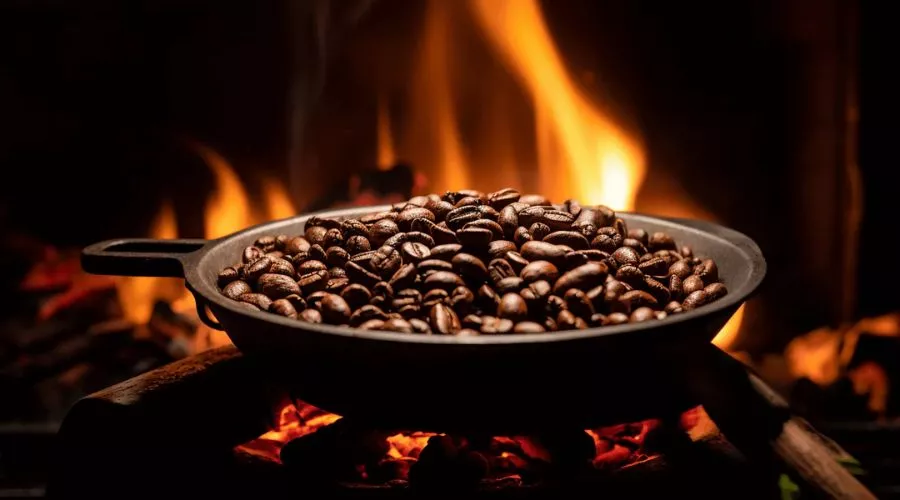
Artisan coffee roasting is not a trend—it is a discipline. It transforms raw green beans into aromatic storytellers shaped by heat, timing, airflow, and instinct. At this level, roasting becomes equal parts chemistry and intuition. Every second inside the drum matters. Every degree of temperature can shift sweetness, acid, or depth.
Across major creative cities, artisan roasters have rebuilt coffee culture from the ground up. They source directly from mountain farms and coastal valleys. They experiment with fermentation styles and roast curves. They roast in small batches where quality, not scale, defines success. And most importantly, they treat coffee not as a commodity—but as an expression of land, climate, and human care.
This journey explores outstanding artisan roasting destinations where craftsmanship leads and flavor follows.
Brooklyn – Devoción: From Farm to Roaster Without Delay
At Devoción, freshness defines identity. Beans arrive quickly after harvest, preserving sugars that usually vanish during long storage. The roasting philosophy centers on light development that highlights floral aromatics, tropical fruit acidity, and honeyed sweetness.
Inside the roastery café, the scent is green and alive—less smoke, more brightness. Every pour-over tastes agile rather than heavy. This approach reshaped how freshness is understood in modern roasting.
Devoción treats coffee as a living product rather than a preserved one.
San Francisco – Ritual Coffee Roasters: Precision Meets Seasonality
Ritual Coffee Roasters built a reputation through uncompromising sourcing standards and seasonal roast profiles. The roasting style emphasizes clarity and balance rather than aggressive intensity.
Farm relationships influence roast decisions directly. Beans change weekly. Profiles adjust constantly. What customers taste today may never exist again in quite the same form.
This roastery operates more like a vineyard than a factory—driven by harvest rather than habit.
Oakland – Blue Bottle Coffee: Early Pioneer of Micro-Roasting Culture
Long before artisan roasting became mainstream, Blue Bottle Coffee was refining small-batch roasting with obsessive quality control. The focus remained on clean cups, high acidity clarity, and minimalist flavor structure.
Every roast aimed for transparency between farm and cup. Heavy roasting was avoided. Instead, origin character led flavor composition.
This roaster helped spark the minimalist movement in modern coffee roasting.
Portland – Coava Coffee Roasters: Direct Trade at Craft Scale
Coava Coffee Roasters operates at the intersection of engineering and agriculture. Roasts aim for syrupy body without muting acidity. Equipment calibration remains precise to near-scientific degree.
Direct trade relationships dominate sourcing strategy. Many beans travel repeatedly between the same farms and the roasting floor, allowing flavor consistency to evolve through shared learning.
This roaster proves technology and tradition can grow together.
Seattle – Elm Coffee Roasters: Nordic Influence on Urban Coffee
At Elm Coffee Roasters, roasting leans toward Scandinavian restraint—lighter development, elevated acidity, and layered sweetness. The result feels both crisp and complex.
The roastery space remains subdued, intentionally quiet, allowing scent and conversation to dominate over noise. Roasts evolve gradually without dramatic curve shifts.
Elm demonstrates how subtle control often outperforms dramatic roasting signatures.
Los Angeles – Verve Coffee Roasters: Coastal Light with Bright Profiles
Verve Coffee Roasters brings brightness to roasting through fruit-forward profiles and lively aroma structure. Ethiopian naturals explode with berry tones, while Central American beans glow with citrus sweetness.
Roast curves prioritize quick development without baking flavor flat. The result feels lively in both espresso and filter extractions.
This roastery reflects coastal coffee culture—energetic, expressive, and forward-moving.
Santa Cruz – Cat & Cloud Coffee Roasters: Transparency as a Core Ethic
At Cat & Cloud Coffee Roasters, education equals quality. Every roast is openly explained, from farm processing style to final extraction notes. The roasting style aims for sweetness clarity and clean finish.
Profiles avoid bitterness by design. Development stops precisely before caramelization overwhelms origin tone. Flavor remains agile rather than weighty.
This roastery treats drinkers as collaborators rather than passive customers.
Chicago – Intelligentsia Coffee: Calibration as Philosophy
Intelligentsia Coffee helped define early specialty roasting standards through rigorous tasting protocols. Every batch undergoes cupping before release. Every roast receives calibration adjustments.
The goal remains balance across multiple extraction styles. Beans must perform in espresso, batch brew, and manual filters without collapse.
Consistency here functions not as uniformity—but as controlled variability.
Minneapolis – Dogwood Coffee Company: Clean Cups with Northern Precision
At Dogwood Coffee Company, northern roasting philosophy dominates—clean, crystalline, and structured. Development avoids heavy caramelization. Instead, sugars remain light and transparent.
Roast profiles favor high-grown beans with natural density. The resulting cups feel agile rather than robust.
This roaster proves restraint can feel as intentional as boldness.
Austin – Greater Goods Coffee Co.: Roasting with Measurable Impact
Greater Goods Coffee Co. combines craft roasting with community-driven purpose. Roasting focuses on versatility—beans must perform across cold brew, espresso, and filter formats with equal integrity.
Profiles balance sweetness and body for broad accessibility without sacrificing signature clarity. Proceeds also fund local impact projects, linking cup quality with social responsibility.
This roaster proves ethics and excellence amplify one another.
Denver – Corvus Coffee Roasters: Precision Without Ornament
At Corvus Coffee Roasters, roasting approaches near-academic precision. Development curves follow strict thermal tracking. Sensory analysis drives release decisions.
Flavor profiles emphasize sugar structure over acidity extremes. Cups feel dense, layered, and composed.
This roastery serves as a technical benchmark for disciplined roasting craft.
Nashville – Barista Parlor: Sensory Drama with Structural Control
Barista Parlor blends theatrical café experience with serious roasting discipline. Bright packaging masks deeply controlled roast chemistry. Each batch aims for aromatic intensity without scorching.
Fruit-forward profiles dominate single origins, while espresso roasts carry structured caramel depth without heaviness.
This roastery bridges sensory excitement with disciplined execution.
Raleigh – Black & White Coffee Roasters: Fermentation-Forward Innovation
At Black & White Coffee Roasters, processing experimentation leads creative direction. Carbonic maceration, extended fermentation, and anaerobic naturals drive flavor architecture.
Roasting stays light enough to protect these complex aromatics. Cups explode with wine-like acidity, tropical sweetness, and layered aftertaste.
This roastery demonstrates how fermentation and roasting now co-author flavor.
Phoenix – Provision Coffee Bar: Desert Clarity with Balanced Body
Provision Coffee Bar approaches roasting with desert-minded restraint—clean development, controlled caramelization, and minimal surface oil. Profiles favor chocolate tones supported by gentle acidity.
The goal remains drinkability across heat-driven climates. Even bright coffees feel balanced rather than sharp.
This roastery shows environment influences roasting philosophy as much as origin.
San Diego – Dark Horse Coffee Roasters: Accessibility Without Compromise
At Dark Horse Coffee Roasters, flavor design leans toward approachability without flattening complexity. Chocolate-based profiles anchor many roasts, supported by mild acidity and rounded sweetness.
Roast curves remain conservative to preserve consistency across a broad audience. Quality never yields to volume.
This roastery reflects how craft scale can still support wide reach.
What Truly Defines Artisan Roasting
Artisan roasting operates far beyond aesthetics or branding. Several defining principles remain constant across all great roasters:
- Small-batch thermal control
- Direct dialogue with farmers
- Frequent profile recalibration
- Sensory cupping as quality gate
- Roast transparency rather than signature masking
Artisan coffee does not chase uniformity—it celebrates variation.
How Roasting Shapes Flavor Architecture
Green beans carry latent chemistry: sugars, acids, proteins, and moisture. Roasting unlocks this potential through three critical phases: drying, Maillard reaction, and development.
- Drying removes surface moisture
- Maillard generates sweetness and body
- Development shapes finish and bitterness control
Every roaster manipulates these phases differently. The smallest adjustment can shift citrus into chocolate or florals into spice.
Roasting does not add flavor—it reveals it.
The Rising Influence of Processing Innovation
Modern artisan roasting now follows fermentation science as closely as roast chemistry. Producers experiment with yeast strains, oxygen exposure, and time-controlled maceration. Roasters then adjust profiles not just for origin—but for microbial expression.
Flavor now emerges from farm and roaster in equal partnership.
This evolution marks the current frontier of specialty coffee.
Why Freshness Redefined Modern Coffee
Traditional coffee moved through long supply cycles. Artisan roasting shortened this timeline drastically. Many beans now reach roasting floors within weeks of harvest.
This freshness preserves:
- Higher sugar content
- Brighter acidity
- Cleaner finish
- Greater aromatic volatility
Freshness now shapes quality far more than roast darkness ever did.
Espresso Versatility as a New Benchmark
Modern artisan roasting demands espresso versatility. A great espresso roast must function across:
- Straight shots
- Milk-based drinks
- Alternative brewing
- Cold extraction
This flexibility requires balanced development rather than extreme darkness or acidity. Roasters now design espresso as a spectrum rather than a fixed profile.
Sustainability as a Core Roasting Ethic
Elite artisan roasters now operate with sustainability embedded into decision-making. This includes:
- Long-term farm contracts
- Climate-resilient sourcing
- Packaging reduction
- Carbon-conscious shipping
- Waste heat recovery systems
Sustainability no longer operates as marketing language—it guides operational structure.
The Emotional Power of Artisan Coffee
Artisan coffee connects people across continents without leaving the cup. Each brew carries elevation, rainfall, soil, fermentation time, shipping climate, and roast decision.
Coffee becomes not only beverage—but narrative.
Every cup offers geography, craftsmanship, and memory in liquid form.
Final Thoughts
Artisan coffee roasting stands as one of the most precise and emotionally driven crafts in modern food culture. It bridges agriculture and chemistry, sensory memory and mechanical control. From direct trade relationships and fermentation science to thermal profiling and flavor architecture, roasting now operates at a level of refinement once reserved only for fine wine.
Each roastery explored here represents not a trend, but devotion. Not scale—but intention.
True artisan coffee does not shout.
It reveals.
