
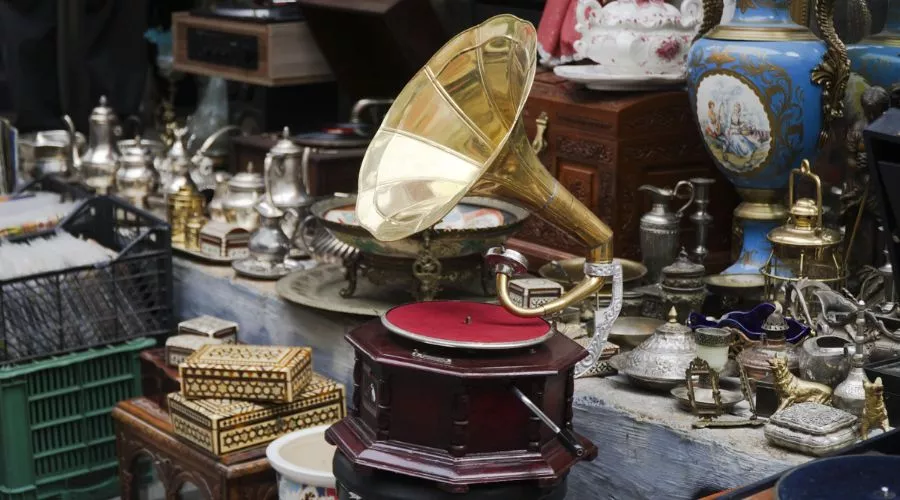
Vintage flea markets are not simply places to shop. They are living archives of everyday history. Each aisle holds fragments of decades past—typewriters that once typed love letters, leather jackets that once danced through midnight streets, glassware that once witnessed family celebrations. These markets do not sell perfection. They sell memory, mystery, and rediscovery.
Unlike polished retail spaces, flea markets reward patience and curiosity. You arrive without knowing what you will find and leave carrying something you never knew you needed. The hunt becomes the experience. The patina becomes the appeal. The imperfections become the proof of life once lived.
This journey moves through legendary vintage flea markets where nostalgia, craftsmanship, and local culture collide beneath open skies and crowded tents.
Brooklyn – Brooklyn Flea
Industrial Grit Meets Curated Cool
Set among brick warehouses and historic neighborhoods, Brooklyn Flea blends edge and elegance effortlessly. Vendors specialize in mid-century furniture, vinyl records, handmade jewelry, antique maps, and rare military pieces.
Collectors hunt for pristine cameras while stylists search for statement coats from forgotten decades. The crowd shifts from serious buyers at sunrise to casual explorers by afternoon. Food vendors, live music, and river breezes complete the atmosphere.
This market thrives by balancing curation with chaos.
Pasadena – Rose Bowl Flea Market
Stadium-Sized Treasure Hunting
Few markets operate on the scale of Rose Bowl Flea Market. Thousands of vendors stretch across an open stadium landscape, transforming browsing into full-scale expedition. Wagons roll past mid-century dressers, neon signage, architectural salvage, and racks of vintage denim.
Professional buyers arrive with lists and measurements. Casual visitors arrive with coffee and curiosity. The sheer size ensures that no two trips ever feel alike.
Here, stamina is as important as taste.
Austin – Uncommon Objects
Dark Americana and Curated Curiosities
At Uncommon Objects, the boundaries between shop, museum, and carnival collapse. Gothic relics sit beside industrial oddities. Medical devices share space with taxidermy and weathered religious icons.
Every piece feels deliberately strange. Nothing feels accidentally placed. The shop thrives on the tension between history and spectacle.
This is vintage collecting for those drawn to the beautifully unsettling.
Portland – Portland Flea
Handcrafted Spirit Meets Last-Century Finds
Inside Portland Flea, vintage goods mingle naturally with modern handmade creations. A 1970s leather bag might sit beside contemporary ceramics. Old film cameras share tables with letterpress art.
Local farmers, artists, and collectors shape the vendor lineup. The atmosphere remains relaxed, inclusive, and quietly creative.
This market proves that vintage culture and modern craft grow stronger together.
Los Angeles – Melrose Trading Post
Fashion-Forward Vintage in Open Air
Held on school grounds every week, Melrose Trading Post blends youthful energy with serious vintage trade. Denim collectors dig through Levi’s archives while jewelry hunters search for handmade silver and turquoise.
Street performers, food trucks, and tattoo pop-ups amplify the social energy. The fashion here leans bold, remixing eras with fearless creativity.
This market doubles as both shopping destination and cultural runway.
Santa Monica – Santa Monica Airport Antique Market
California Sunlight Over European Elegance
Specializing in high-end antiques, Santa Monica Airport Antique Market attracts interior designers and antique purists. French armoires, carved mirrors, brass fixtures, and rustic farm tables fill open runways once used by aircraft.
Prices reflect rarity and condition, but browsing alone feels cinematic. The contrast between aviation concrete and European refinement gives the market its surreal charm.
This is flea market collecting at gallery scale.
Alameda – Alameda Point Antiques Faire
Waterfront Collecting with Military Heritage
Set on a former naval air station, Alameda Point Antiques Faire combines maritime atmosphere with some of the finest vintage inventory anywhere. Vendors present refined collections of ceramics, industrial lighting, retro furniture, and rare textiles.
Collectors arrive with tape measures and transport trucks. Casual shoppers linger over costume jewelry and postcard bins.
The waterfront breeze carries both salt air and history.
Chicago – Randolph Street Market
Urban Elegance in Loft-Style Lanes
Inside industrial buildings and open-air extensions, Randolph Street Market blends fashion, décor, art, and architectural salvage into a sophisticated urban bazaar. The crowd skews design-conscious without losing its sense of play.
Vintage gowns hang beside restored barber chairs. Antique apothecary cabinets face contemporary art installations.
This market feels curated without ever feeling controlled.
Brooklyn – Artists & Fleas Williamsburg
Indie Design Meets Vintage Revival
Within converted industrial spaces, Artists & Fleas Williamsburg hosts a rotating mix of independent designers and vintage curators. Jewelry makers, letterpress artists, and upcycled fashion brands share aisles with traditional collectors.
The energy stays youthful, experimental, and constantly evolving. Visitors never know which vendors will appear each weekend.
This market thrives on reinvention rather than repetition.
New Orleans – French Market
Centuries of Trade Beneath Iron Balconies
Operating continuously for generations, French Market mixes vintage collecting with regional craft and culinary culture. Antique paintings hang near wrought-iron décor. Old books blend with handmade leather goods.
Music drifts through the aisles. The scent of spice follows every step. Here, vintage commerce unfolds within deep-rooted cultural rhythm.
This market carries both the soul of trade and the heartbeat of the city.
Phoenix – Thieves Market
Desert Heat, Community Heart
Thieves Market brings together vintage massive energy with local artisanship. Colorful tents display retro clothing, vinyl, ceramics, and custom furniture. The crowd arrives with families, friends, and dogs in tow.
Live DJs create festival-like atmosphere. The sun drives the pace, but shaded corners invite lingering.
This market blurs the line between swap meet and social gathering.
Brooklyn – Grand Bazaar NYC
Weekend Traditions and Sustainable Shopping
Every weekend, Grand Bazaar NYC fills schoolyards with stalls dedicated to sustainable reuse and creative vintage resale. Proceeds support local education, blending commerce with community benefit.
Antiques, handmade crafts, global textiles, and rescued furniture share space under colorful umbrellas. The crowd moves slow, conversational, and relaxed.
This market shows how reuse can power both economy and education.
San Diego – Kobey’s Swap Meet
Beachside Bargains and Hidden Gems
Operating near ocean air, Kobey’s Swap Meet combines thrift-scale discovery with genuine vintage surprises. Collectors dig through crates of records, surf memorabilia, and military surplus.
Tourists browse sun hats and postcards. Locals arrive at dawn for serious hunting.
This market celebrates both spontaneous browsing and dedicated collecting.
What Makes Vintage Flea Markets Irreplaceable
Across regions and styles, vintage flea markets share defining qualities that no modern retail space can replicate:
- No two inventories are ever identical
- History replaces branding as the selling point
- Imperfection becomes proof of authenticity
- Conversations replace checkout automation
- Serendipity replaces algorithms
Each visit reshapes the market experience.
The Psychology of the Antique Hunt
Vintage collecting triggers a distinct emotional response. The search activates curiosity, anticipation, competition, and reward simultaneously. Finding a perfect item buried in clutter releases a sense of earned discovery that conventional shopping cannot recreate.
Collectors often speak of intuition—the feeling that an object “belongs” to them long before purchase.
This emotional attachment transforms objects into personal artifacts rather than simple purchases.
How Flea Markets Shape Local Creative Economies
Many designers, stylists, decorators, and resellers build entire careers around flea market sourcing. A found jacket becomes a runway piece. A salvaged door becomes a studio table. A broken chandelier becomes an art installation.
Flea markets quietly fuel fashion cycles, interior trends, and creative industries without ever claiming center stage.
Sustainability Through Second Life
Every vintage purchase extends a product’s lifespan and reduces manufacturing demand. Flea markets function as circular economies long before sustainability became a buzzword.
Objects avoid landfills. Materials find second purposes. Craftsmanship receives renewed appreciation.
Buying vintage becomes an environmental act as much as a style choice.
The Social Ritual of Market Days
For many, flea markets are not errands—they are social rituals. Friends meet for coffee before browsing. Parents teach children to negotiate prices. Couples build shared collections over years.
Market vendors remember returning customers. Conversations deepen over time. What begins as commerce evolves into relationship.
How Digital Culture Changed Flea Markets Without Replacing Them
Social platforms expanded the reach of vintage dealers beyond physical booths. Yet flea markets remain irreplaceable because physical touch, weight, patina, and scent cannot be downloaded.
Digital culture amplified interest—but the markets remain the altar.
Final Thoughts
Vintage flea markets survive because they operate outside speed, sameness, and perfection. They invite wandering instead of efficiency. They reward patience instead of impulse. They celebrate wear rather than erase it.
Each stall holds a thousand stories waiting for new stewards. Each object asks not for perfection—but for purpose.
In a world of endless production, flea markets quietly preserve what once was—and what still matters.
